At A Glance
- Weight Reduction: Drops panel weight from 150+ lbs (AM2) down to 48 lbs (AML) for single-person carry.
- Logistics Optimization: Slimmed to 1-inch thickness; fully compatible with modern shipping containers and 463L military pallets.
- Rapid Build Time: Enables deployment teams to construct dispersed aircraft parking areas in just 1 to 3 days.
- Supply Chain Resilience: Friction stir weld design breaks single-source manufacturing bottlenecks by opening production to multiple domestic fabricators.
- Field Validation: Successfully stress-tested during large-scale, hands-on troop demonstrations in Guam.
Every mission depends on access. In contested environments, access often begins with the runway.
For decades, U.S. forces have relied on the AM2 expeditionary airfield matting system to rapidly build and repair airfields, aircraft parking areas and taxiways. However, as aircraft, logistics systems and operational demands have changed, the U.S. Army Engineer Research and Development Center (ERDC) has worked to develop a lighter, more adaptable system designed to help military forces move faster and sustain operations in more places.
“The ability for airfield matting to quickly add surfaces and quickly increase support is huge. It definitely can shape… how we’re fighting.”
The Airfield Mat Lightweight system, or AML, is a government-owned expeditionary airfield matting capability designed to reduce logistics burdens, accelerate deployment and give Warfighters more flexibility in austere environments.
During a recent episode of the Power of ERDC podcast, Dr. Abby Cisco, a research mechanical engineer at ERDC, highlighted logistics as one of the effort’s primary drivers. Legacy AM2 “doesn’t fit into any of the modern logistics shipping containers or 463L pallets,” Cisco said. “The other problem with it is weight.”
Each AM2 panel weighs more than 150 pounds, creating transportation challenges and adding physical strain for service members installing the system. That weight also limits the ability of some allied forces to assist in laying panels during combined operations.
 ERDC PHOTO
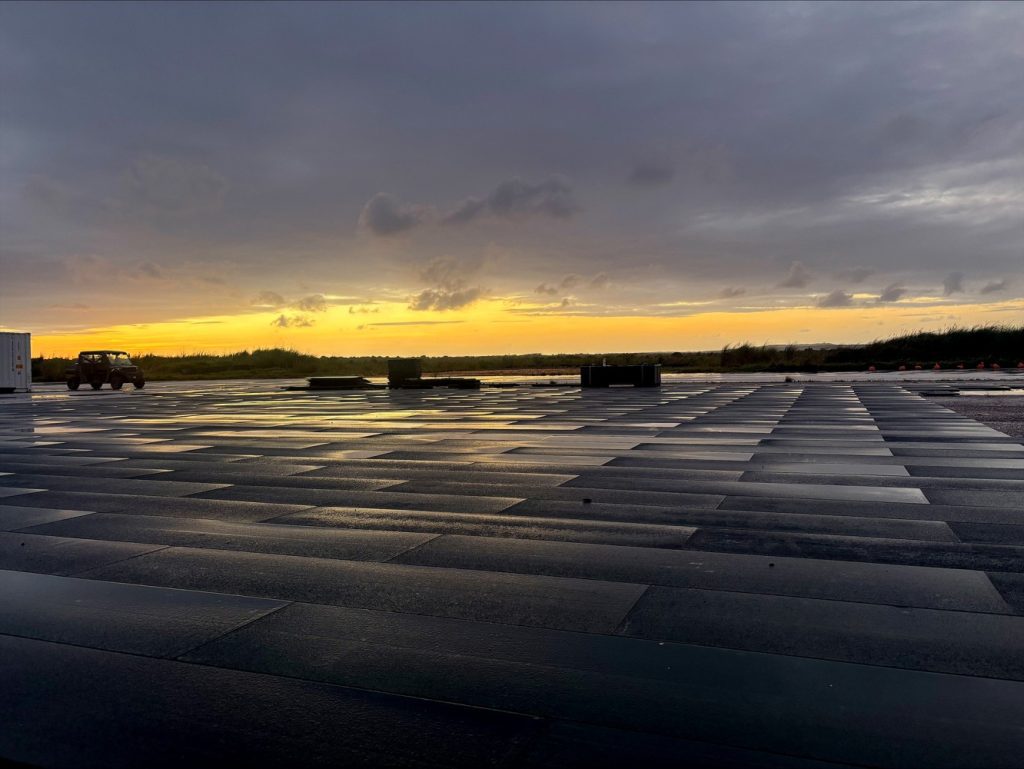
The AML system reduces the panel thickness from 1.5 inches to 1 inch and lowers the weight to 48 pounds, meaning each panel can be carried by a single person.
The system is also designed to improve manufacturability. Unlike AM2, which relies on a single manufacturer, AML is extruded in two pieces and joined using friction stir welding, allowing multiple U.S. manufacturers to produce the system.
Government ownership gives the U.S. Army the ability to adapt the design as mission requirements evolve. It also allows the government to retain the drawing package, and foster competition and industry collaboration to improve the system over time.
“It being government owned gives us that freedom,” Cisco noted. “It also opens up for competition.”
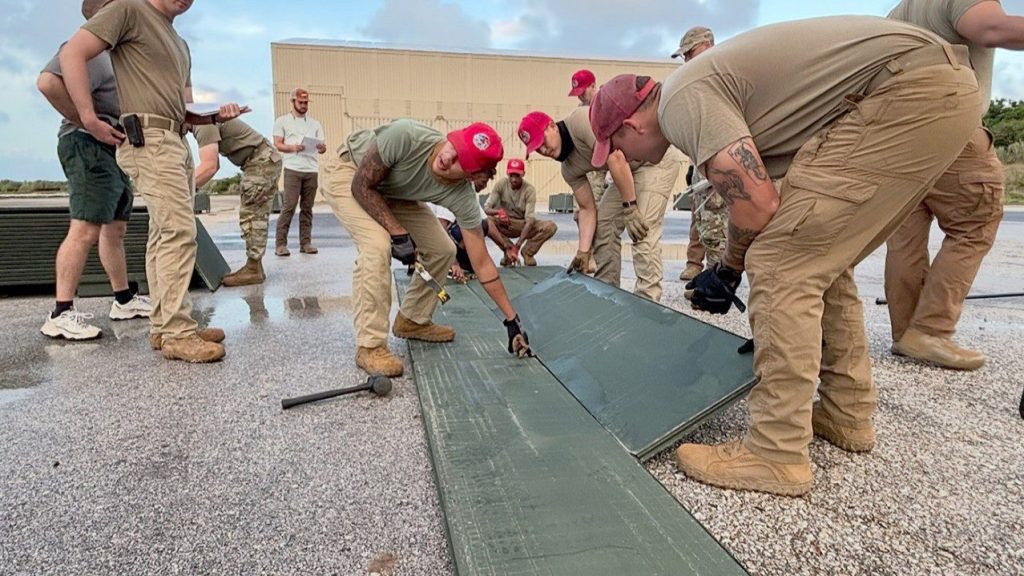
That freedom is central to ERDC’s effort to accelerate the delivery of innovation from the laboratory to the field. In Guam, ERDC conducted a large-scale, hands-on demonstration with Soldiers using the event to evaluate AML and refine the criteria documents Warfighters will rely on during future operations.
“It allowed us to essentially shape that document so it’s as Warfighter friendly as it can be,” Cisco said.
The result is a capability that can help the joint force rapidly expand airfield capacity. With AML, a team can create a dispersed aircraft parking area in two-to-three days, or one-to-two days with additional personnel.
For military personnel, that speed can change the operational picture. Instead of waiting weeks or months for traditional construction, military planners can quickly add aircraft parking, taxiways or support areas, and then remove and relocate the system as the mission changes.
Cisco described the capability to rapidly increase operational support in austere environments.
“The ability for airfield matting to quickly add surfaces and quickly increase support is huge,” she said. “It definitely can shape… how we’re fighting.”
To learn more, listen to the Power of ERDC Podcast at poweroferdcpodcast.org.
This article was originally written by Shelley Tingle for the Office of Research and Technology Transfer under the title, “Lightweight airfield matting gives the military speed, flexibility in contested environments.”