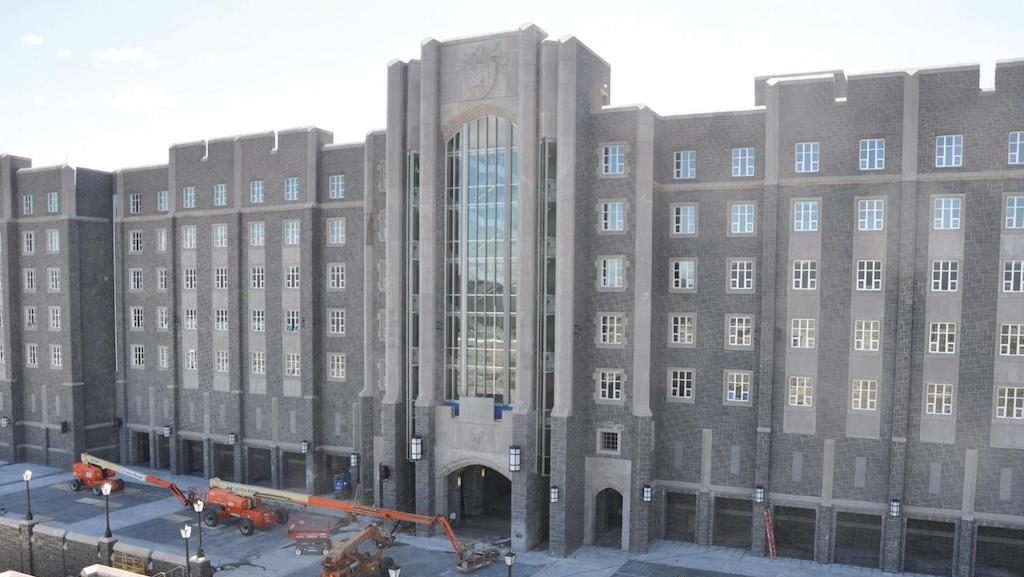
Mexico’s new National School of Civil Protection will train professionals in disaster risk management. The Kansas City District, U.S. Army Corps of Engineers, in partnership with Mexico, U.S. Northern Command and the U.S. Embassy in Mexico City, planned, designed and built the new facility. A ribbon cutting ceremony was held on Sept. 18, 2026, in Mexico City to celebrate the completion of the project.
At A Glance
Historic Milestone Project: The Kansas City District, U.S. Army Corps of Engineers planned, designed, and oversaw construction of Mexico’s new National School for Civil Protection—marking the first USACE civilian sector disaster preparedness project in Mexico’s history.
Multi-Agency Partnership: Executed through collaboration between the Mexican Government, U.S. Northern Command (USNORTHCOM), the U.S. Embassy in Mexico City, and USACE.
Strategic Mission & Threat Profile: Built to train risk management professionals facing complex natural hazards, including seismic faults on the “Ring of Fire,” active volcanoes (Popocatépetl), floods, and wildfires threatening Mexico City’s 23+ million residents.
Ribbon Cutting Ceremony: Officially completed and dedicated on Sept. 18, 2026, ahead of Mexico’s annual National Civil Protection Day on Sept. 19.
Broad International Scope: Serves as a central hub offering in-person and online disaster preparedness training across Mexico, Central America, and the wider North American region.
Editor’s Note: The following is from the USACE Kansas City District, curated by America’s Engineers for general public, commercial contractor, and industry visibility. The original article can be found at the U.S. Army Corps of Engineers news repository.
Mexico’s population in 2026 stands at over 133 million. Mexico City alone, the nation’s capital, is home to over 23 million people. This sprawling mega city stretches as far as the eye can see. However, multiple “sleeping giants” lie in wait, threatening the people of the western hemisphere’s second largest city and the surrounding region.
VIPs cut the ribbon at a ceremony celebrating the completion of Mexico’s new National School of Civil Protection, which was held on Sept. 18, 2026, in Mexico City. The new facility will train professionals in disaster risk management.
Mexico City sits on a large seismic fault line known as the “Ring of Fire” and is home to Popocatépetl, one of the most active volcanoes on the continent. The threat of earthquakes, volcanic eruptions and other disasters like floods and wildfires are ever-present in the country. It’s these imminent dangers that led the Mexican government, in partnership with the U.S. Northern Command and the U.S. Embassy in Mexico City, to call on America’s engineers to build the new National School of Civil Protection to train professionals in disaster risk management.
“[The National School for Civil Protection] will become a cornerstone for integrated disaster risk management in Mexico, serving as a space dedicated to training highly skilled professionals whose work will directly impact risk reduction and development of communities to better prepare for current and future challenges,” said Enrique Guevara Ortiz, director of Mexico’s National Center for Disaster Prevention.
Col. Andrew Niewohner, commander of the Kansas City District, U.S. Army Corps of Engineers, speaks at the ribbon cutting ceremony for Mexico’s new National School of Civil Protection, which was held on Sept. 18, 2026, in Mexico City to celebrate the completion of the project. The Kansas City District, in partnership with Mexico, U.S. Northern Command and the U.S. Embassy in Mexico City, planned, designed and built the new facility.
The Kansas City District, U.S. Army Corps of Engineers planned, designed and oversaw construction of the facility, which was officially completed just in time for Mexico’s annual National Civil Protection Day on Sept. 19. A ribbon cutting ceremony for the state-of-the-art training facility was held on Sept. 18, 2026. The building now stands as the first USACE construction project in Mexico.
Workstations inside Mexico’s new National School of Civil Protection, which will train professionals in disaster risk management.
“[The new school] is very important for Mexico and the larger region,” said Enrique Bravo Medina, director of the National School for Civil Protection.
Enrique Bravo Medina, director of the National School for Civil Protection, speaks at the ribbon cutting ceremony for Mexico’s new National School of Civil Protection, which was held on Sept. 18, 2026, in Mexico City to celebrate the completion of the project.
The building will be the country’s main training facility and will offer both in-person and online training opportunities. But the training opportunities will not be limited to just those in Mexico City. The facility will offer disaster response and prevention courses throughout the country and the region.
A conference room inside Mexico’s new National School of Civil Protection, which will train professionals in disaster risk management.
“This is not just a Mexican issue, and this is not just a Central American issue,” said Christie Myers, humanitarian assistance program manager with U.S. Northern Command. “[The National Center for Disaster Prevention’s] vision for a [training] center both for Mexico and for the region in disaster preparedness and response … crosses borders.”
By prioritizing collaboration and partnership, the team ensured construction continued to progress on the critical facility despite facing the typical challenges of a large-scale construction project.
Enrique Guevara Ortiz, director of Mexico’s National Center for Disaster Prevention, speaks at the ribbon cutting ceremony for Mexico’s new National School of Civil Protection, which was held on Sept. 18, 2026, in Mexico City to celebrate the completion of the project.
“True partnership is not defined by how we start, but by how we stand together when challenges arise,” said Col. Andrew Niewohner, commander of the Kansas City District. “This project is a testament to what we can accomplish when we put partnership at the forefront. It now stands as the first USACE disaster preparedness project with Mexico’s civilian sector in history.”
No one understands the importance of fostering positive relationships better than those who live and work in Mexico City and face the threat of natural disasters and emergencies daily. On a clear day, those learning at the new National School for Civil Protection will be able to look out the window and see Popocatépetl looming at the outskirts of the city. But having a dedicated disaster risk management training facility will help Mexico prepare and respond should the worst-case scenario occur – whether within its borders or elsewhere in North America.
A simulation room inside Mexico’s new National School of Civil Protection, which will train professionals in disaster risk management. The Kansas City District, U.S. Army Corps of Engineers, in partnership with Mexico, U.S. Northern Command and the U.S. Embassy in Mexico City, planned, designed and built the new facility. A ribbon cutting ceremony was held on Sept. 18, 2026, in Mexico City to celebrate the completion of the project.
“This is a project that transcends boundaries, benefiting not only Mexico but the region as a whole,” said Guevara Ortiz.
Popocatépetl, one of the most active volcanoes in the western hemisphere, can be seen from Mexico’s new National School of Civil Protection, which will train professionals in disaster risk management.
This article was originally published by the U.S. Army Corps of Engineers under the title, “’A project that transcends boundaries’: Ribbon cutting ceremony held for Mexico’s new National School for Civil Protection.” Reposted with permission.



VIPs cut the ribbon at a ceremony celebrating the completion of Mexico’s new National School of Civil Protection, which was held on Sept. 18, 2026, in Mexico City. The new facility will train professionals in disaster risk management.
Col. Andrew Niewohner, commander of the Kansas City District, U.S. Army Corps of Engineers, speaks at the ribbon cutting ceremony for Mexico’s new National School of Civil Protection, which was held on Sept. 18, 2026, in Mexico City to celebrate the completion of the project. The Kansas City District, in partnership with Mexico, U.S. Northern Command and the U.S. Embassy in Mexico City, planned, designed and built the new facility.
Workstations inside Mexico’s new National School of Civil Protection, which will train professionals in disaster risk management.
Enrique Bravo Medina, director of the National School for Civil Protection, speaks at the ribbon cutting ceremony for Mexico’s new National School of Civil Protection, which was held on Sept. 18, 2026, in Mexico City to celebrate the completion of the project.
A conference room inside Mexico’s new National School of Civil Protection, which will train professionals in disaster risk management.
Enrique Guevara Ortiz, director of Mexico’s National Center for Disaster Prevention, speaks at the ribbon cutting ceremony for Mexico’s new National School of Civil Protection, which was held on Sept. 18, 2026, in Mexico City to celebrate the completion of the project.
A simulation room inside Mexico’s new National School of Civil Protection, which will train professionals in disaster risk management. The Kansas City District, U.S. Army Corps of Engineers, in partnership with Mexico, U.S. Northern Command and the U.S. Embassy in Mexico City, planned, designed and built the new facility. A ribbon cutting ceremony was held on Sept. 18, 2026, in Mexico City to celebrate the completion of the project.
Popocatépetl, one of the most active volcanoes in the western hemisphere, can be seen from Mexico’s new National School of Civil Protection, which will train professionals in disaster risk management.