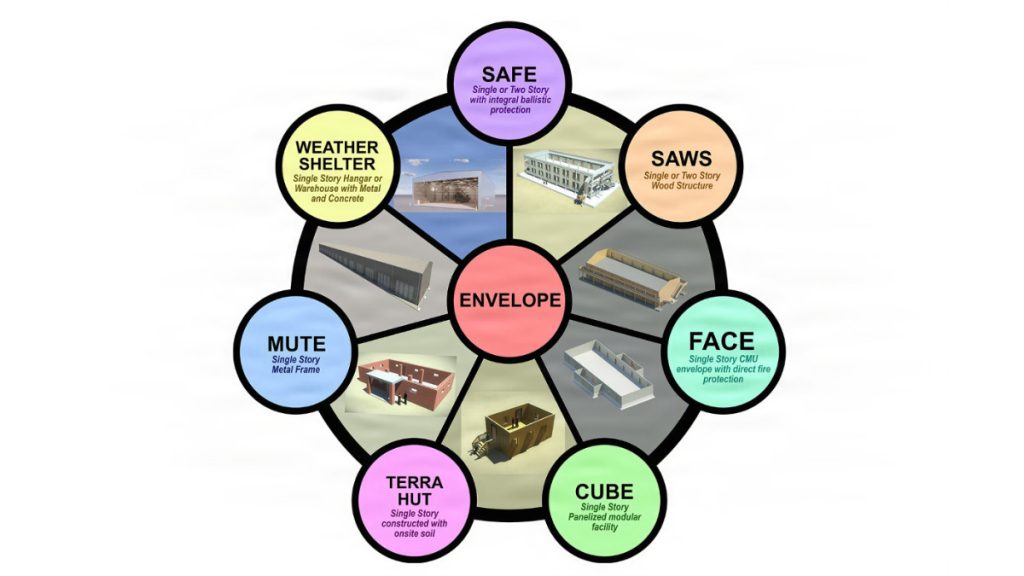
Standardized Envelope Library: The USACE Center of Standardization for Nonpermanent Facilities (COS) maintains 7 pre-engineered design envelopes that cut months off traditional construction start times.
Dispelling “Nonpermanent” Myths: Designed to specific military building codes, these facilities can last 25+ years with routine maintenance while using local materials and minimal heavy equipment.
Comprehensive Project Deliverables: Interagency partners receive material specifications, construction cost estimates, execution schedules, 3D printed models, and 3D virtual walkthrough files.
Versatile Operational Footprint: Adaptable into barracks, medical clinics, dining halls, fitness centers, helicopter shelters, and ballistically protected structures.
Global Deployments: Successfully deployed for helicopter shelters in Kuwait, deployable prototypes in Poland, and military housing/dining facilities in Puerto Rico.
Editor’s Note: The following is an official operational update from the U.S. Army Corps of Engineers Center of Standardization for Nonpermanent Facilities, curated by America’s Engineers for commercial contractor and industry visibility. The original report can be found at the U.S. Army Corps of Engineers news repository.
There’s a saying in the engineering and construction community, “You can have it good, you can have it fast and you can have it cheap. Pick two.” But what if you didn’t have to choose?
That’s a question being asked by the U.S. Army Corps of Engineers Center of Standardization for Nonpermanent Facilities (COS). The center maintains a library of 7 standardized designs known as envelopes that can be readily adapted for virtually any use. Because the designs already exist, there are significant time savings when compared to the traditional design and build process. Using the COS can save several months off the time typically required to start construction.
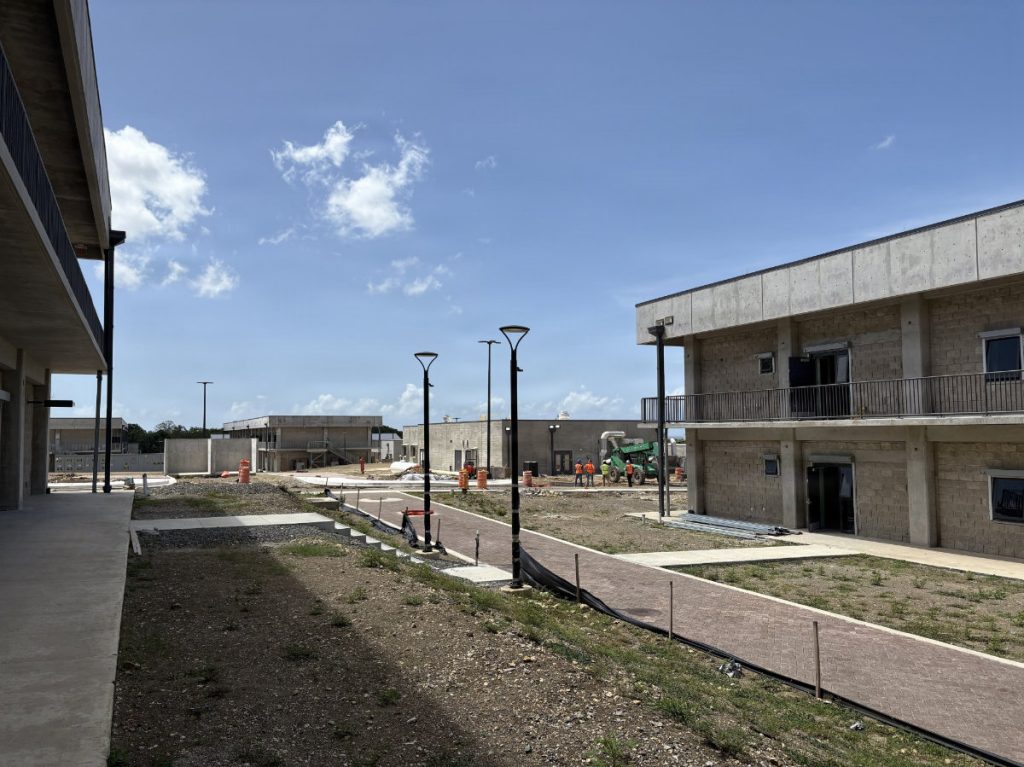
Military barracks constructed by the U.S. Army Corps of Engineers Center for Standardization for Nonpermanent Facilities (COS). The “nonpermanent” designation is related to building codes and not necessarily the lifespan of the building. Depending on the construction methods and materials, buildings constructed using a COS design can last up to 25 years.
Additionally, all designs can be built using local materials, minimal heavy equipment use, and reduced maintenance costs, lowering both their short- and longer-term costs compared to comparable permanent structures.
And according to Dan Echols, the program manager for the COS, “nonpermanent,” is specific to building codes and government facilities criteria, not necessarily indicative of how long the facility will last.
“People hear the word nonpermanent and they often think of something flimsy but depending on the materials and construction methods used, facilities built using our designs can last up to 25 years and possibly more with routine maintenance,” said Echols.
He also emphasized that when a U.S. Army Corps of Engineers partner works with the COS they are getting more than just the building design.
“We provide material specifications, construction estimates, execution schedules, 3D printed building models, and 3D virtual walk-through files. All these things add up to significant cost and time savings on a project.”
In addition to saving time and money, another major feature of the COS is the flexibility of its designs. Senior contract manager for the COS team, Patricia Torok, said their designs can be adapted into virtually anything a customer might want.
“We can give them barracks, fitness centers, aircraft shelters, medical facilities and more. Two of the designs can even be constructed to provide ballistic protection if needed.”
By utilizing existing standard designs (Fast), local materials and simplified assembly processes (Cheap), and engineering structures with up to 25-year plus lifespans and advanced adaptability (Good), the USACE Center of Standardization for Nonpermanent Facilities has successfully rewritten the rules of the construction game.
Kara Vick, a mission manager for the critical public facilities during the Hawaii Wildfires Recovery Mission, oversees the placement of a module for the Federal Emergency Management Agency assigned temporary elementary school in Lahaina on Maui. (USACE photo by Carol E. Vernon)
Echols noted because the of the COS’s adaptability, he’d like to see it expand beyond primarily military customers.
“We’re available to any government agency that wants to use us,” he said. “We could be used to provide temporary housing in disasters, setting up equipment shelters, storage facilities, if there is a need out there, we can probably meet it,”
Whether building logistics centers and helicopter shelters in Kuwait, testing rapidly deployable prototypes in Poland or constructing military dining facilities and barracks in Puerto Rico, the COS is proving that military readiness does not require compromise. In the defense of the nation and supporting allied nation partners around the globe, USACE is delivering “good, fast, and cheap” all at once.
This article was originally published by the U.S. Army Corps of Engineers under the title, “Pick Three: USACE Standardized Designs Challenge Construction’s Oldest Rule.” Reposted with permission.